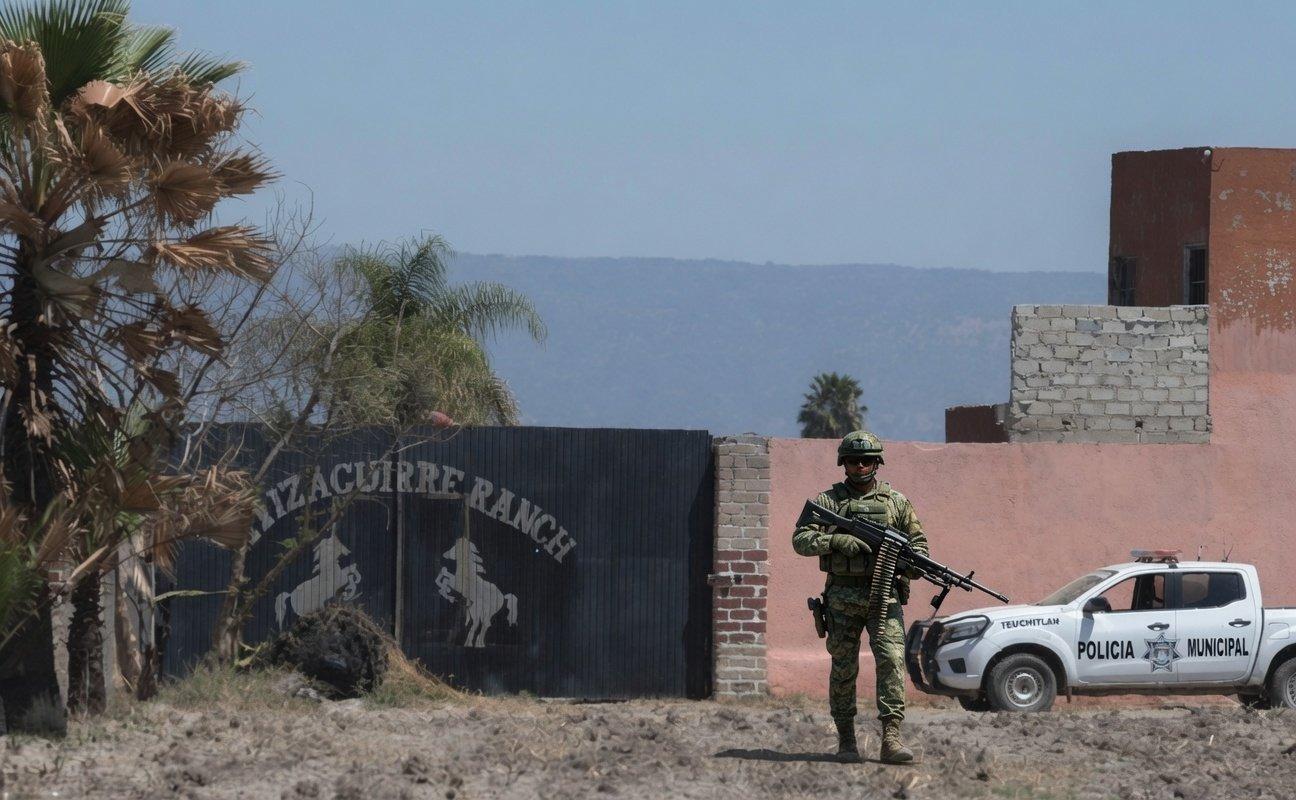
Sixty Years of Clean Land. Then the Cartels Sent the Cows.
New World screwworm reached US soil June 3, 2026 — not through natural dispersal, but through 800,000 smuggled cattle per year moving through cartel-controlled biosphere reserves without inspection, documentation, or interdiction. USDA's answer: $100 million for satellite surveillance and a drone Grand Challenge. The pipeline keeps running.
Investigative exposé | New World Screwworm
On June 3, 2026, a three-week-old calf in Zavala County, Texas, was found with larvae burrowing into its umbilical wound. USDA APHIS confirmed it the same day: New World screwworm, back on American soil for the first time since the United States systematically eradicated it in 1966. Within six days, six confirmed cases spread across Zavala, La Salle, and Andrews Counties. Strike teams deployed. Twenty-kilometer quarantine zones established. Sterile flies dropped from aircraft. USDA called it a national security issue.
What USDA did not say — not in any press release, not in any official statement at Screwworm.gov — is how Cochliomyia hominivorax traveled nearly 700 miles from the Nicaragua-Honduras border to South Texas in under three years. The fly does not drive. It rides hosts. And the hosts, in this case, arrive courtesy of the 800,000 head of cattle that organized crime networks smuggle into Mexico every year — without inspection, without legitimate documentation, without a single senior federal official publicly naming the connection.
America eradicated this pest once — at $800 million and sixty years of discipline
The eradication of New World screwworm from the United States is one of the most successful agricultural biosecurity campaigns in history. Beginning in the 1950s, USDA deployed the sterile insect technique across the South, flooding zones with sterile male flies that produced no offspring. By 1966, the continental US was declared screwworm-free. The campaign pushed south through Mexico and Central America, establishing a permanent biological barrier at the Panama-Darien Gap by the early 2000s. The barrier held for more than two decades.
It did not fail because the fly mutated. It failed because a parallel criminal economy — narco-ranching, operating at industrial scale inside protected biosphere reserves — built a movement infrastructure the barrier was never designed to stop. Texas Public Policy Foundation senior researcher Ammon Blair told the Texas Senate Committee on Water, Agriculture and Rural Affairs in May 2026: “Texas does not currently face a normal neighboring country, but rather an increasingly autocratic narco-state, where cartels and elements of the Mexican government operate in conscious and voluntary symbiosis in major economic sectors, including agriculture, livestock, transportation, and commerce.”
The smuggling route is documented. The networks are named. Washington is silent.
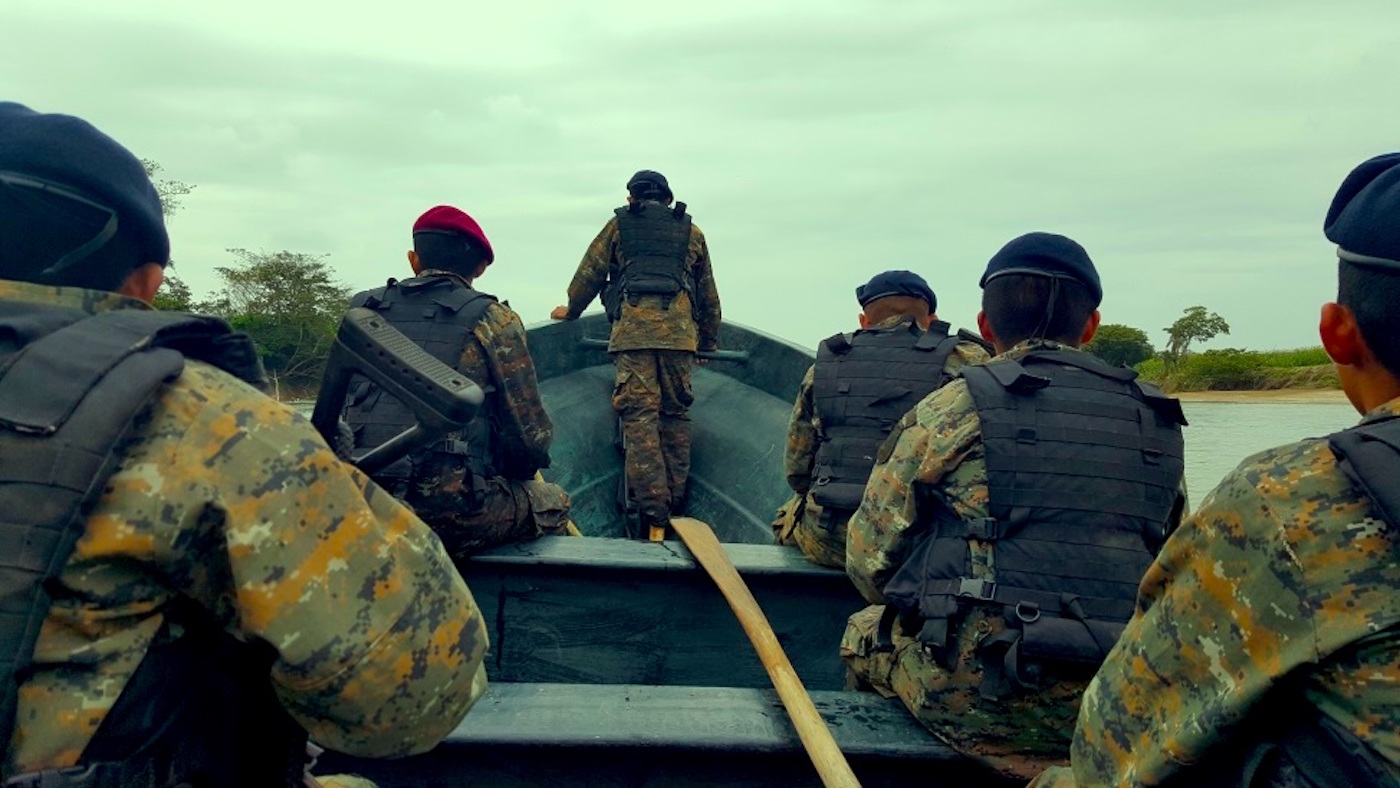
In 2022, InSight Crime published “Cash Cows: The Inner Workings of Cattle Trafficking from Central America to Mexico,” a 14-month field investigation tracing the full criminal value chain. Drug trafficking organizations clear protected forest inside Nicaragua’s Bosawás reserve, Honduras’s Río Plátano Biosphere, and Guatemala’s Maya Biosphere. They build illegal ranches, run herds northward through river crossings with no customs presence, and move cattle from those reserves through Honduras and Guatemala into Mexico’s Chiapas state — loaded onto covered wooden canoes crossing the Usumacinta River at Benemérito de las Américas, a border town with no formal crossing point and, by InSight Crime’s account, no meaningful enforcement.
The Wildlife Conservation Society confirmed in November 2024 what the geography made obvious: screwworm outbreak hotspots mirror those smuggling routes precisely. The parasite covered nearly 700 miles — Nicaragua-Honduras border to Catazajá, Mexico — in roughly two and a half months. WCS Regional Director Jeremy Radachowsky named the vector directly: illegal cattle trade “created a rapid corridor for the parasite, allowing it to travel at the speed of trucks.” He added what no USDA press release has stated: “We cannot sterilize our way out of a trafficking pipeline.”
Mexico’s own federal veterinary authority, SENASICA, estimates 800,000 head of cattle cross illegally from Guatemala into Mexico every year. Official legal exports from Guatemala in 2021: 7,234 head. The gap between those two numbers is the pipeline. At approximately $400 per animal, the smuggling trade represents a $320 million annual market — larger than the beef industries of most US states.
BeefNews/BeefMaps mapped the river crossings, the collection yards, and the laundering trail in detail:
Beef News
Inside the Narco-Beef Route: How Cartel Cattle Slither Across the Mexico–Guatemala Border — Beef News
Cartel cattle cross rivers and jungles into Mexico, then reemerge as USDA-approved beef. JBS imports from the same plants fed by these routes. We mapped the laundering trail—because the tags don’t tell the truth, but the routes do.
Policy Blindspot I
The laundering machine that carries the fly
The screwworm's biological journey from Central American biosphere reserves to Zavala County, Texas, required one thing above all: living hosts moving fast across hundreds of miles without inspection. The mechanism is a parallel documentation economy that Mexico's own federal government has quantified.
Mexico's national cattle traceability system, SINIIGA, issues official ear tags at roughly $2.50 each. Those same tags trade on the black market for $20 to $35 — up to fourteen times the legal price. Traffickers obtain them through corrupt union officials, falsified production counts, and stolen rancher identities. Once contraband cattle carry official-looking tags and forged veterinary certificates, their Central American origin disappears entirely. A government official in southern Mexico told InSight Crime: "The irony is that everything comes in legally. I have no legal argument for rejecting cattle. On paper, there is no legal violation."
Between January and June 2025 alone, more than 500,000 non-compliant ear tags were confiscated in Chiapas. Applied across the 800,000 head SENASICA estimates cross illegally each year, the black market ear tag economy generates up to $18 million annually — a self-financing pipeline that requires no drug revenue, no cartel coordination, just corrupt veterinarians, complicit union officials, and a federal enforcement apparatus that told InSight Crime cattle trafficking was not its responsibility.
The sterile fly release cannot touch this. SIT interrupts reproduction. It does not intercept hosts arriving in eradication zones at the speed of trucks.
USDA’s answer: $100 million for drones. Zero for dismantling the pipeline.
Five months before screwworm reached Texas, USDA Secretary Brooke Rollins announced the New World Screwworm Grand Challenge: up to $100 million, roughly 20 awards, applications due February 23, 2026. The stated priorities: enhanced sterile fly production, novel traps and lures, new animal therapeutics, and — in Topic 4 of the notice of funding opportunity — “imagery tools for surveillance of animal movements (e.g., the use of drone/satellite technologies, AI-assisted trail cameras).” Secretary Rollins called it “a strategic investment in America’s farmers and ranchers.” The press release did not mention narco-ranching. It did not mention the Usumacinta River. It did not mention Benemérito de las Américas.
The disconnect is not a communications failure. It is a structural one. Drone surveillance photographs illegal cattle movements from altitude. It does not stop them. Satellite imagery maps route corridors. It does not interdict them. SIT fills zones with sterile flies. It does not close the crossing points where 800,000 head per year enter Mexico without documentation. The Grand Challenge funds what federal agencies can measure and contract. The criminal infrastructure operates in the governance gaps between jurisdictions — the reserves where DTOs clear forest under protected status, the river crossings where no agency claims authority, the municipal offices where veterinary certificates are forged for cash.
Simultaneously, USDA is advancing a domestic technology mandate that independent ranchers have been fighting in court for over a year. The April 2024 ADT final rule requires electronically readable RFID tags for interstate cattle movement. R-CALF USA and the New Civil Liberties Alliance filed suit in the US District Court for South Dakota, arguing the mandate is unlawful, imposes $3-per-head costs on small operations, and covers only approximately 10 percent of the national herd. R-CALF CEO Bill Bullard has called it “unnecessary and unlawful” — a Biden-era rule that “flies in the face of President Trump’s efforts to put an end to costly government regulations.” The court denied USDA’s motion to dismiss. The case proceeds.
Policy Blindspot II
$100 million for innovation, $0 for interdiction
On January 21, 2026 — while screwworm was already advancing through northern Mexico toward the Texas border — USDA Secretary Brooke Rollins announced the New World Screwworm Grand Challenge: up to $100 million in federal funding for innovative biosecurity tools. The priorities listed: enhanced sterile fly production, novel traps and lures, new therapeutics, and "other tools to bolster preparedness." Topic 4 of the NOFO explicitly includes "imagery tools for surveillance of animal movements (e.g., the use of drone/satellite technologies, AI-assisted trail cameras)."
None of the listed priorities addresses the 800,000-head-per-year smuggling pipeline. None targets the SINIIGA black market. None proposes interdiction at the Usumacinta River crossings where cattle move by canoe without documentation. The Grand Challenge funds what can be measured in a lab or demonstrated via satellite feed. The criminal infrastructure that reseeded the pest operates in jurisdictional gaps that satellites photograph and border agents ignore.
The RFID mandate compounds the problem. USDA's April 2024 final rule — currently being challenged in federal court by R-CALF USA and the New Civil Liberties Alliance — requires electronically readable ID tags for interstate cattle movement. R-CALF CEO Bill Bullard has called it "unnecessary and unlawful," noting it covers only roughly 10 percent of the nation's cattle herd. The rule adds approximately $3 per head in costs to independent producers. It does nothing for cattle that never officially cross any border.
InSight Crime's fieldwork makes the adaptation risk explicit: criminal networks have already industrialized the laundering of contraband cattle using the simpler visual ID system. Mandating a more sophisticated, database-dependent format creates higher-value forgery targets while leaving the underlying enforcement gaps in reserve corridors and river crossings untouched. The cartels already know how to buy the right tag. USDA is about to make the tag more valuable.
Texas ranchers are checking wounds. The pipeline is still running.
The federal response since June 3 has been rapid on the technical layer. Sterile fly dispersal began June 4 — 2 million sterile screwworms released twice weekly by aircraft, 4 million more per week through 24 ground chambers. USDA activated Moore Air Base in Edinburg, Texas as a sterile fly dispersal facility. The CDC activated its Emergency Operations Center. Seventy-five personnel deployed to South Texas within a week of first detection. The USDA response dashboard at Screwworm.gov tracks confirmed cases by county in real time.
None of that disrupts the pipeline. Sterile fly release works only if infested hosts stop arriving in the eradication zone. If 800,000 head per year — carrying larvae, unsupervised, through unmonitored crossings — continue entering Mexico’s northern states, the fly releases in Texas become a permanent expenditure rather than a terminal campaign. The $800 million eradication of the last century was built on movement controls alongside SIT. This one is being built on satellite feeds and tag databases applied to the compliant 10 percent of the herd.
American ranchers in Zavala, La Salle, and Andrews Counties are checking their animals’ wounds daily. They are doing everything right. The system they depend on is fighting the last mile of a supply chain that begins in a protected reserve in Nicaragua, runs through cartel-controlled collection points in Chiapas, and arrives on their land carrying a counterfeit ear tag. USDA is spending $100 million to watch it happen from a drone.
New World screwworm returned to US soil not through natural dispersal but through the cartel-controlled cattle smuggling networks that move 800,000 head annually across Central America without biosecurity controls — while USDA responds with a $100 million drone and satellite Grand Challenge that photographs the pipeline without dismantling it, and a mandatory RFID mandate that burdens independent ranchers while handing cartel networks a higher-value forgery target.
More in Investigative
-
 chevron_right
Washington State's Own Wetland Specialist Doubted the Case. They Fined the Farm $204,000 Anyway.
May 27, 2026 · Beef News
-
 chevron_right
The State is Evicting a Fifth-Generation Rancher for a Danish Energy Conglomerate
May 17, 2026 · Beef News
-
 chevron_right
Nine Days: DOJ Names Them, Trump Family Dines With Them, White House Flies One to Beijing
May 14, 2026 · Beef News