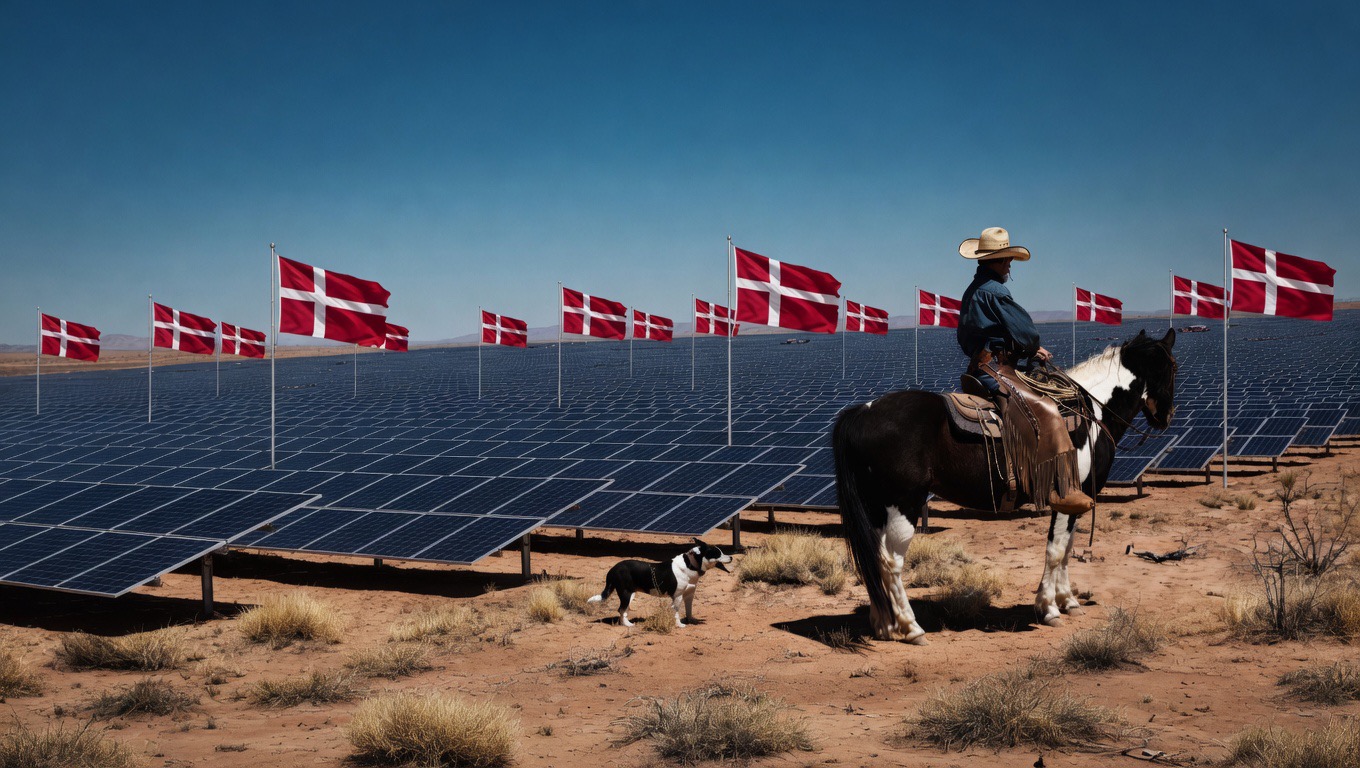
The State is Evicting a Fifth-Generation Rancher for a Danish Energy Conglomerate
Arizona's state land fiduciary mandate — accelerated by Governor Hobbs' executive order and a $26M solar auction economy — is structurally designed to displace ranching. Casey Murph's fifth-generation operation is the latest to face eviction for a Danish-owned solar project. The public comment window is still open.
Arizona’s fiduciary mandate guarantees ranchers lose every time a solar giant files. Casey Murph’s family grazed this land before statehood. Ørsted’s surveyors just walked through his locked gate.
Ørsted’s surveyors showed up at Casey Murph’s locked gate without warning. No public filing. No hearing. No notice to the rancher whose family has worked this stretch of northern Arizona since before the state existed. Just a request for access to survey several sections of his best winter pasture — land his operation cannot survive without.
That access request is the tell. It means Ørsted has already filed with the Arizona State Land Department. The formal eviction process has started. Murph just wasn’t supposed to know yet.
“I just received a notification that Ørsted has made a move to evict my cattle from several sections of land within our AZ state allotment,” Murph posted April 28. “If it happens there will be no winter pasture left, and our operation will be done after 5 generations.”
Nine hundred and ninety-three likes. Six hundred and six reposts. The post went wide — not because it was inflammatory, but because everyone in ranching country already knew the pattern. They’d seen it happen to their neighbors.
The Math That Dooms Grazing
The Arizona State Land Department manages 9.2 million acres of state trust land with a single legal obligation: maximize revenue for public school beneficiaries. That mandate is not discretionary. It is written into statute. ASLD does not weigh food security, generational land use, or rural economic continuity. It runs an auction, and whoever bids highest wins.
The ASLD FY2024 Annual Report shows what that math produces. Grazing across 8.32 million acres generated $3.014 million last year. A single utility-scale solar auction — like the upcoming Grand Verde Energy lease in Maricopa County covering 4,003 acres — carries a $26 million appraised minimum bid. One solar deal. Eight times the annual grazing revenue across the entire state trust system.
Ranching never had a chance in this equation. It just took the solar build-out to make that visible.
Governor Hobbs Put the Accelerator Down
On September 15, 2025, Governor Katie Hobbs signed Executive Order 2025-13, directing ASLD to identify and fast-track pending renewable energy infrastructure leases, cut red tape for solar, wind, storage, and transmission projects, and report within 30 days on streamlining the process. The order explicitly funds dedicated ASLD staff through the federal State Energy Program to move projects faster.
Murph is direct about what that means on the ground:
He’s right on the policy record. The ASLD Strategic Plan FY2026 commits the department to issuing 15 new renewable energy leases by June 2029 and explicitly to streamlining the solar lease process. That is not passive fiduciary management. That is active industrial policy favoring subsidized offshore energy corporations over domestic food production. The Inflation Reduction Act tax credits backstopping these projects make the economics even more lopsided.
The Family Down the Road Already Lost
A few miles from Murph’s operation, the DeSpain family had been ranching since 1904. They lost their state trust allotment to Invenergy’s Hashknife Solar project — 475 megawatts of solar and battery storage, groundbreaking December 2024. They sued. They lost. They signed an NDA. One participant described the operation as reduced to “a few cows.”
Rusty DeSpain told reporters: “You treat it like your own backyard… then they just come in and take it out from underneath you overnight.”
The Cygnus Solar project — 650 megawatts plus 400 megawatts of battery storage across 3,700 acres north of Snowflake — executed its development agreement in February 2026. Construction begins 2027. Navajo County is being converted, section by section, into an industrial solar corridor. Every approval makes the next one easier.
Productive Land Targeted. Idle Land Ignored.
Murph has pressed this point repeatedly, and nobody in state government has answered it. There are hundreds of thousands of acres of zero-carrying-capacity state trust land in Arizona — degraded desert, exhausted soil, terrain that will grow nothing. Ørsted isn’t filing on those acres.
“The only reason that solar is projected onto open lands and not urban arrays is for the benefit of utility conglomerates,” Murph wrote May 13. “Massive open land installations are the preferred model because of political considerations favoring the renewable industrial complex. I have this straight from the mouth of a representative from the USDOE.”
Rooftops. Parking structures. Brownfields. Degraded scrubland with no grazing value. The alternatives exist. They are not chosen — because large, contiguous, flat, productive acreages are cheaper to develop at scale and carry no political constituency willing to fight back. Ranchers in Navajo County are that constituency. They are being outbid by statute.
The co-use argument — that cattle can graze beneath solar panels — collapses in practice on high desert rangeland. As Murph put it: “By the time the machinery gets done in construction, the ground will be pounded and nothing will grow but tumbleweed for 50 years.”
Five Generations, Then a Danish Corporation
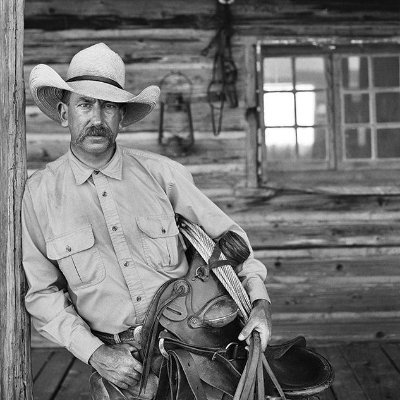
Five generations on this land — until Ørsted filed.
Ørsted is headquartered in Fredericia, Denmark. It is majority owned by the Danish state. It operates in the United States on federal and state subsidies. Its Eleven Mile Solar Center in Pinal County — commissioned in 2024, 300 megawatts, 300 megawatts of battery storage — was built to power Meta’s data centers. It is described by Ørsted as a permanent industrial installation. The rangeland it replaced is gone.
That is the template being applied to Murph’s winter pasture. A foreign government-owned energy company, subsidized by American taxpayers, acquiring Arizona state trust land through a revenue-maximization auction that ranchers cannot win by design, to build infrastructure that will be barren and lifeless — his words — for the operational life of the installation.
The U.S. beef herd is at historic lows according to USDA NASS. Every acre of productive winter range that converts to panel infrastructure reduces carrying capacity, accelerates herd liquidation, and tightens supply into a market already under pressure from packer consolidation and pricing opacity. The retail price signal is not abstract. Murph said it plainly in his April 28 post: “Things like this have directly contributed to the high cost of retail beef in stores.”
The Auction Hasn’t Happened Yet
This is still stoppable. The ASLD Board of Appeals has final authority. No approval has been issued. The Ørsted application for Murph’s allotment has no confirmed public filing number — consistent with early-stage surveying before formal auction — which means the public comment window is open.
Murph’s ask is specific: click Contact Us at land.az.gov and submit a comment. His suggested language: “We encourage the Arizona State Land Department to deny applications for utility scale solar on lands that have livestock grazing leases” — or direct Ørsted and similar applications toward land without active grazing leases.
Rep. Eli Crane and Rep. Andy Biggs have been tagged. Secretary Brooke Rollins at USDA has been tagged. Navajo County ranchers have submitted public testimony. The political pressure is building.
The machinery of state-enabled displacement is running. What stops it is ranchers, consumers, and producers making the ASLD’s revenue calculation politically expensive. That window is open right now.
Find ranchers selling direct at BeefMaps.com.
More in Investigative
-
 chevron_right
Sixty Years of Clean Land. Then the Cartels Sent the Cows.
Jun 18, 2026 · Beef News
-
 chevron_right
Washington State's Own Wetland Specialist Doubted the Case. They Fined the Farm $204,000 Anyway.
May 27, 2026 · Beef News
-
 chevron_right
Nine Days: DOJ Names Them, Trump Family Dines With Them, White House Flies One to Beijing
May 14, 2026 · Beef News