315 Farms Filed Bankruptcy in 2025. 160,000 Just Disappeared.
Farm bankruptcies jumped 46% in 2025. The real number is the 160,000 who exited without filing — absorbed into a consolidating system that benefits packers, not producers. Record debt, flat income, and a structural architecture designed to accelerate exits tell the same story: this is what managed decline looks like.
Standard markdown. Square brackets for anchor text, parentheses for URL, ## for H2. Full article:
title: “315 Farms Filed Bankruptcy in 2025. 160,000 Just Disappeared.” pubDate: 2026-04-29T06:45:00-04:00 author: “Beef News” excerpt: “Farm bankruptcies jumped 46% in 2025. That’s the number they counted. The 160,000 silent exits nobody reported tell the real story — absorbed into a consolidating system that benefits packers, not producers.” category: “Investigative” tags:
- farm bankruptcies
- consolidation
- meatpacker monopoly
- USDA
- Chapter 12
- Big Four
- rancher sovereignty
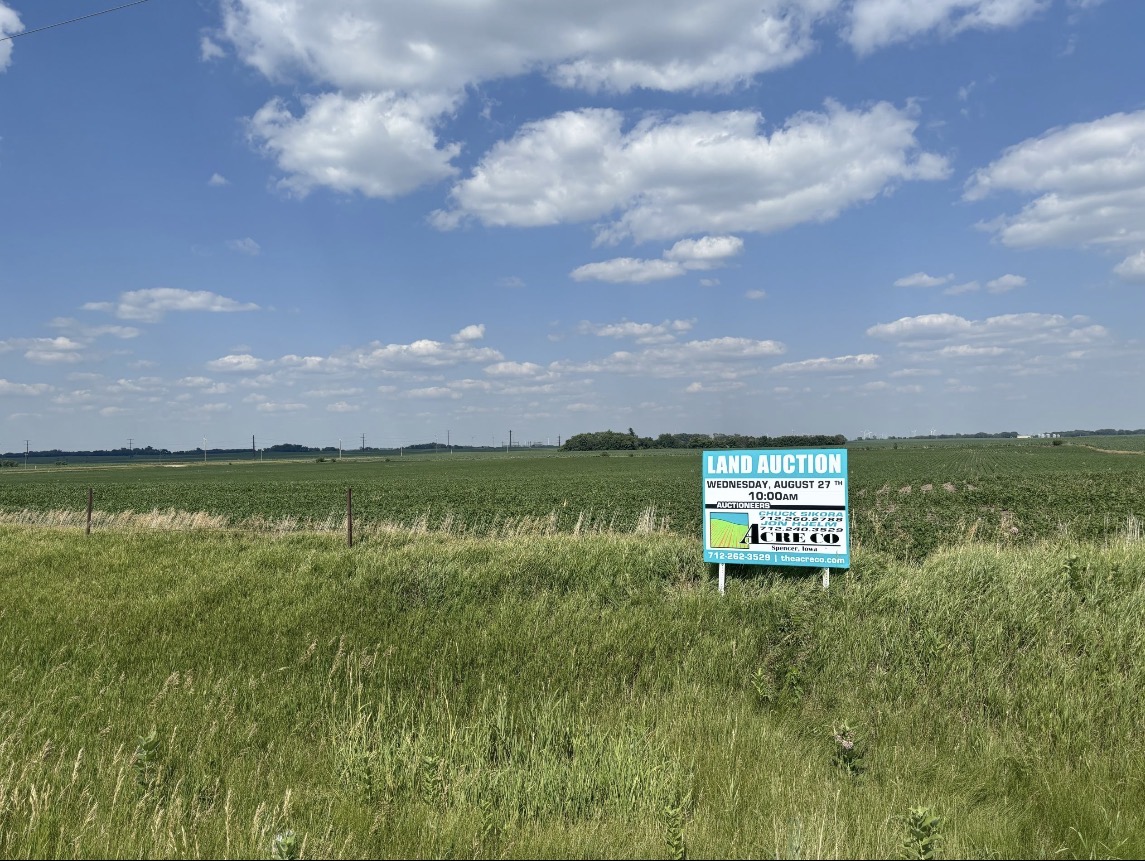
- BeefMaps featured: true heroImage: “farm-bankruptcy-auction-midwest.jpg” heroImageAlt: “Farm auction sign posted on rural property in the American Midwest” heroImageCredit: “16:9 crop — source from farm auction / foreclosure imagery, location-specific preferred (Iowa, Arkansas, or Wisconsin)“
315 visible. 160,000 gone quiet.
The headline number is 315. That’s how many family farm operations filed for Chapter 12 bankruptcy protection in 2025 — a 46% jump from 216 filings in 2024, confirmed by U.S. Courts caseload data and analyzed by the American Farm Bureau Federation in February 2026.
The Midwest alone posted 121 filings — up 70% year-over-year. The Southeast added 105. Arkansas set a century high with 33 filings, driven by rice sector collapse. Iowa spiked 220%. Wisconsin, 700%. Missouri, 167%.
Those are the farms the system counted.
Now ask about the ones it didn’t.
The body count nobody’s reporting
Chapter 12 bankruptcy has an eligibility threshold most struggling farmers never reach. To qualify, a producer must derive the majority of gross income from farming operations. In an era where off-farm income has become a survival mechanism — not a supplement — that rule functions as a filter. Distressed operators who took outside work to stay solvent don’t qualify. They don’t file. They just disappear.
Between 2017 and 2024, more than 160,000 farms exited U.S. agriculture without a single court filing. No bankruptcy. No public record. No headline. They sold the land, wound down the operation, or simply stopped. The USDA Agricultural Census documents the shrinking farm count — from roughly 2.04 million operations in 2017 to approximately 1.88 million in 2024. That’s not consolidation as an abstraction. That’s 160,000 families who absorbed the losses, exited quietly, and handed their land to whoever was capitalized enough to absorb it.
The bankruptcy stat is a lagging indicator. By the time a farm files Chapter 12, it has already survived years of margin compression, rolled operating debt, and exhausted every alternative. What the court data shows is the floor — not the ceiling — of agricultural collapse.
The arithmetic of structural failure
The financial mechanics behind both the visible and invisible exits are identical. USDA Economic Research Service projects total farm debt reaching a record $624.7 billion in 2026 — up 5.2% from an already-elevated baseline. Interest expenses alone are tracking toward $33 billion, also a record. Farmers took on larger operating loans in late 2025, with average loan sizes up 30% — not to expand, but to cover inputs.
Net farm income for 2025 came in at approximately $154.6 billion — $25 billion below prior projections, and roughly 24% below the 2022 commodity spike that briefly made the balance sheets look solvent. The 2026 forecast holds flat at $153.4 billion. Cash receipts are soft. Crop income is weak. Beef strength masks broad livestock weakness in dairy, hogs, and poultry.
Expenses never normalized. Input costs that spiked in 2021–2022 remained elevated. Interest rates compounded the debt load. Government payments — which account for roughly 29% of net income in some ERS scenarios — have not closed the gap. Safety net architecture designed for the largest, most diversified operations reaches mid-sized row-crop and livestock producers last, if at all.
The pattern is not new. It is a compressed replay of the 1980s farm crisis: commodity boom followed by global supply recovery, overproduction, cost inflation that outlasted price strength, debt overhang, and then exits — some visible, most not.
Who wins when farms fail
The 315 bankruptcy filings and 160,000 silent exits don’t produce a vacuum. They produce a transaction. Every farm that exits has assets — land, equipment, water rights, grazing leases — and those assets move to whoever is capitalized to absorb them at distressed prices.
That buyer is rarely another family farmer.
USDA land tenure data tracks the ongoing migration of agricultural acreage toward fewer, larger operations. The trend predates this cycle — but each farm crisis accelerates it. Consolidation is not a side effect of financial distress. It is the mechanism. Thin margins plus high leverage plus commodity bust equals forced sales. Forced sales in a market dominated by capitalized buyers equals concentration.
The Big Four meatpackers — JBS, Tyson, Cargill, and National Beef — control roughly 85% of fed cattle slaughter. That concentration doesn’t exist despite farm exits. It exists because of them. Every independent producer who exits the market is one fewer seller with pricing power at the negotiating table. The cash market thins. Formula pricing expands. The captive supply that packers use to suppress negotiated prices grows larger.
The same structural logic applies in row crops, dairy, and poultry. Fewer independent operators means more contracted production, more vertical integration, and less price discovery that reflects actual supply and demand. The Packers and Stockyards Act exists to prevent this concentration from metastasizing into overt market manipulation — but enforcement has been irregular for decades, and the concentration it was designed to prevent is now the baseline condition of the industry.
The math doesn’t lie, and neither does the map
315 filings. Record debt. Flat income. 160,000 exits. These are not projections or models. They are U.S. Courts data, USDA ERS balance sheet figures, and Census of Agriculture headcounts. They are primary sources, and they tell a single coherent story: the structural conditions that produce farm consolidation are accelerating, the safety nets are not catching the operations most exposed, and the farms that exit — however they exit — transfer their market position to consolidated buyers.
This is not a supply chain problem. It is a cartel problem. And the solution is not more government payments distributed through the same architecture that has failed to arrest the trend for thirty years. The solution is price transparency, direct markets, and the infrastructure that makes both possible.
Independent ranchers and producers don’t need another program. They need buyers who pay a fair price, and a market structure that makes price-fixing impossible.
Find them at BeefMaps.com.