
"First They Hacked Our Farms. Now They’re Writing Our Laws": Section 453, Monsanto-China, and the Silent Coup Over U.S. Agriculture
Chinese operatives spent over a decade stealing U.S. crop genetics, rice proteins, even Monsanto's software. Now Congress is rewarding that theft by locking the EPA to outdated science—handing Bayer and ChemChina full control over what poisons stay legal. Section 453 isn’t deregulation—it’s surrender.
While America’s farmers struggle to navigate corporate monopolies and rising input costs, a quiet clause buried on page 196 of a House spending bill could lock pesticide safety to foreign-controlled science—and tie the hands of U.S. regulators.
Welcome to Section 453 of the FY2026 Interior Appropriations Bill.
Source: House Appropriations Committee
A Clause Only Monsanto Could Love
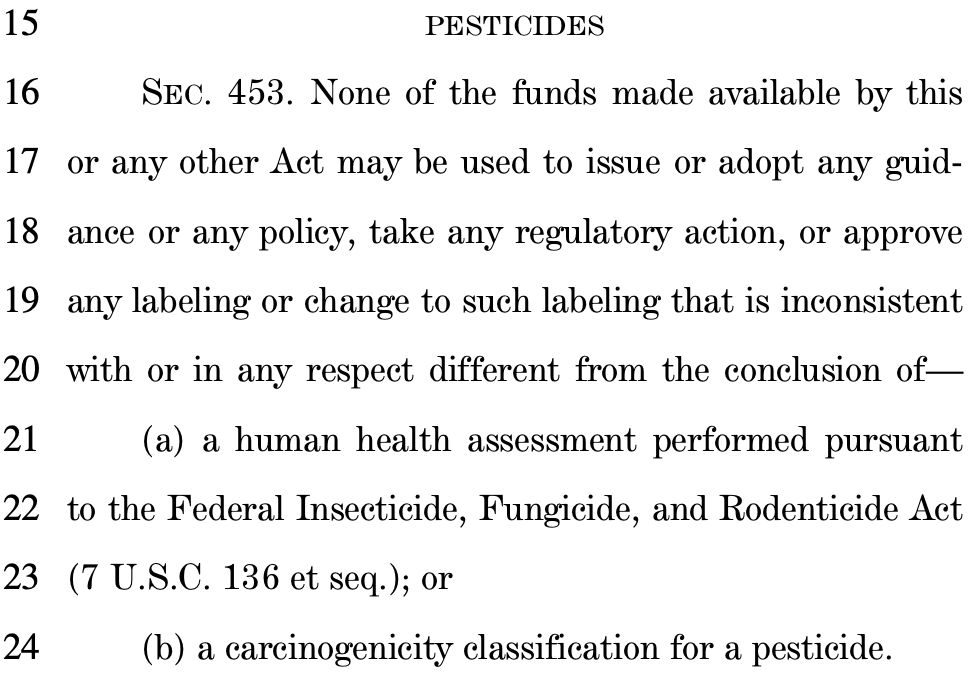
In the July 15, 2025, subcommittee markup, House appropriators advanced a provision that reads like it came straight from a Bayer-Monsanto lobbying memo. Section 453 states:
“None of the funds made available by this or any other Act may be used to… take any regulatory action… inconsistent with… [a] human health assessment performed pursuant to the Federal Insecticide, Fungicide, and Rodenticide Act (FIFRA).”

Advertisement
Translation? The EPA is banned from using new science—whether peer-reviewed cancer studies or international health agency reclassifications—unless those findings align with the original FIFRA assessments, many of which are based on industry-submitted data.
It’s not just a freeze. It’s regulatory gag order.
And the timing isn’t accidental.
China and Bayer Control the Pipeline

While Congress neuters the EPA, the companies profiting most from pesticide immunity are not even American.
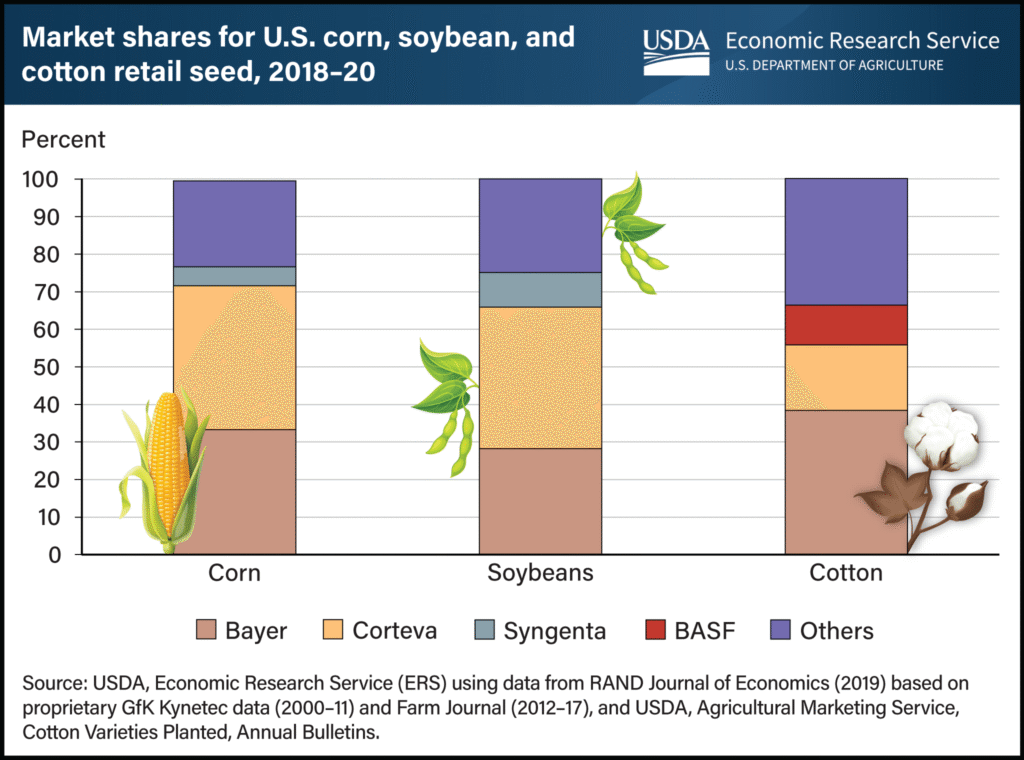
As of 2023, Bayer-Monsanto and Syngenta, a subsidiary of state-owned ChemChina, controlled over 50% of U.S. corn, soybean, and cotton seed sales, according to USDA data. They also dominate the herbicide and insecticide markets—including glyphosate and paraquat, two of the most contested and globally restricted chemicals on Earth.
Source: USDA
Bayer is currently facing over 67,000 lawsuits tied to Roundup (glyphosate), while Syngenta is pushing paraquat, banned in more than 60 countries—but still sold across rural America.
Source: US Department of Justice
And here’s the kicker: Chinese entities didn’t just buy into the ag chemical supply chain. They stole the blueprints.
Between 2013 and 2019, the FBI charged multiple Chinese nationals with conspiracy, theft of trade secrets, and economic espionage involving:
- Corn germplasm from Iowa fields (2016)
- Engineered rice proteins from Ventria Bioscience (2018)
- Monsanto’s precision ag software (2022)
- Fungal pathogens vital to crop immunity (2025)
According to a 2019 FBI report (to download the PDF directly click here), China’s goal was explicit: to “gain a strategic advantage in global agriculture” by bypassing years of R&D through theft.
Now, thanks to Section 453, that stolen pipeline is effectively insulated—from scrutiny, from liability, and from science.
Farmers Trapped Between Monopoly and Toxicity
This isn’t about deregulation. It’s about outsourcing regulatory control to monopolists—some of them backed by a foreign adversary.
While Section 453 silences the EPA, farmers remain locked into seed and pesticide contracts controlled by the very companies benefiting from that silence. Independent testing? Irrelevant. Global reclassification of glyphosate as a likely carcinogen? Doesn’t matter.
And if this clause becomes law, future pesticide reviews will be governed by past decisions—even if the science has moved on, even if the public is at risk, even if the seed was stolen.
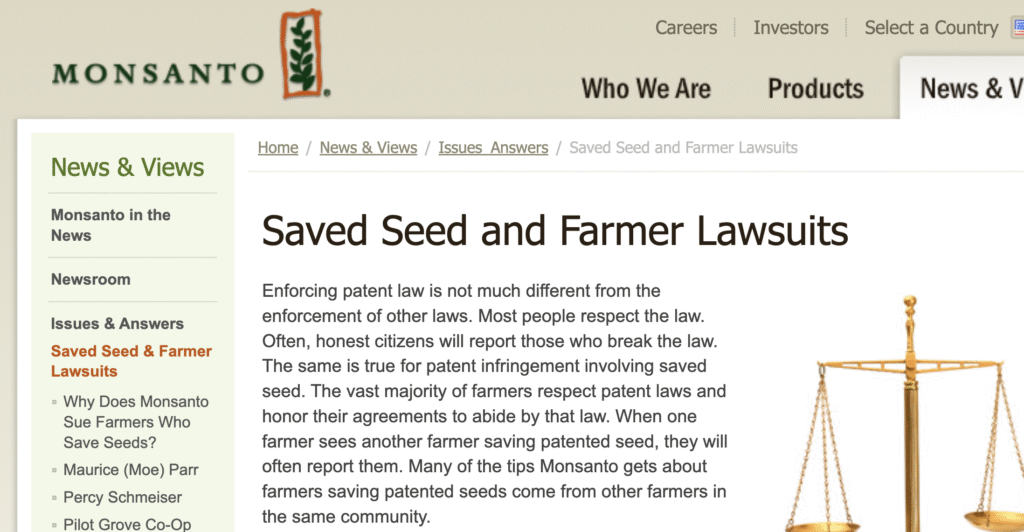
Check out this archived Monsanto op-ed where saving seeds makes you a criminal—and corporate snitches are cast as agricultural heroes.
Source: Monsanto
It’s Not Just About Chemicals—It’s About Sovereignty
The U.S. government has documented for over a decade that China is targeting American agriculture. The Senate Permanent Subcommittee on Investigations warned in 2019 that Beijing’s talent recruitment and tech theft programs were penetrating universities, seed companies, and biotech labs.
The USDA’s own Homeland Security Division flagged agricultural IP theft as a critical national security risk in 2023.
And now, Congress wants to enshrine chemical silence into law.
open_in_new youtu.beThe Rebellion Cue
If China stole the seeds, and Bayer owns the patents, who exactly is Section 453 protecting?
This isn’t food safety. This is chemical cartel capture—with foreign fingerprints all over it.
Farmers, scientists, and state attorneys general must act now to strip Section 453 before it’s buried in law. The future of pesticide accountability—and American food sovereignty—depends on it.
More competition. Fewer foreign monopolies. Start there.
Want to break free from the global ag cartel? Find a local rancher at BeefMaps.com and shake your rancher’s hand.
Call These Members of Congress and Demand They Strike Section 453 from H.R. 9043
Section 453 of the FY26 House Interior Appropriations bill would freeze the EPA’s pesticide reviews and block 67,000 cancer lawsuits tied to Roundup. Congress votes soon. These are the members of the Appropriations Committee with the power to stop it—call now and tell them: “Remove Section 453 from H.R. 9043.”
Republicans:
- Rep. Mike Simpson (ID-02): (202) 225-5531
- Rep. Michael Cloud (TX-27): (202) 225-7742
- Rep. Tom Cole (OK-04): (202) 225-6165
- Rep. Jake Ellzey (TX-06): (202) 225-2002
- Rep. Celeste Maloy (UT-02): (202) 225-9730
- Rep. Guy Reschenthaler (PA-14): (202) 225-2065
- Rep. Ryan Zinke (MT-01): (202) 225-5628
Democrats:
- Rep. James “Jim” Clyburn (SC-06): (202) 225-3315
- Rep. Rosa DeLauro (CT-03): (202) 225-3661
- Rep. Josh Harder (CA-09): (202) 225-4540
- Rep. Betty McCollum (MN-04): (202) 225-6631
- Rep. Chellie Pingree (ME-01): (202) 225-6116
Bonus:
Rep. Marjorie Taylor Greene (GA-14): Already publicly opposed the provision. Call to thank her and show support: (202) 225-5211
More in Farm Policy
-
 chevron_right
One farmer, one file, one surveillance contract: Palantir and USDA join forces.
Apr 26, 2026 · Beef News
-
 chevron_right
Michigan loses 100,000 acres of farmland — in 2024 alone!
Mar 23, 2026 · Breeauna Sagdal
-
 chevron_right
The Green Shoot America Can't Afford to Miss
Mar 10, 2026 · Beef News
-
 chevron_right
Break Up the Bottleneck: Washington Finally Notices the Meat Cartel — Right as America Runs Out of Cattle
Mar 7, 2026 · Beef News