Beef News Radar | April 2, 2026: The first meatpacking strike in 40 years, a federal land deal, and the feedlot cartel’s quiet power grab.
The first meatpacking strike in 40 years just took 5% of U.S. beef offline — while mega-feedlots tighten their grip and Washington signs deals on 240 million federal acres. The cartel is consolidating.
Brazilian plant, American problem
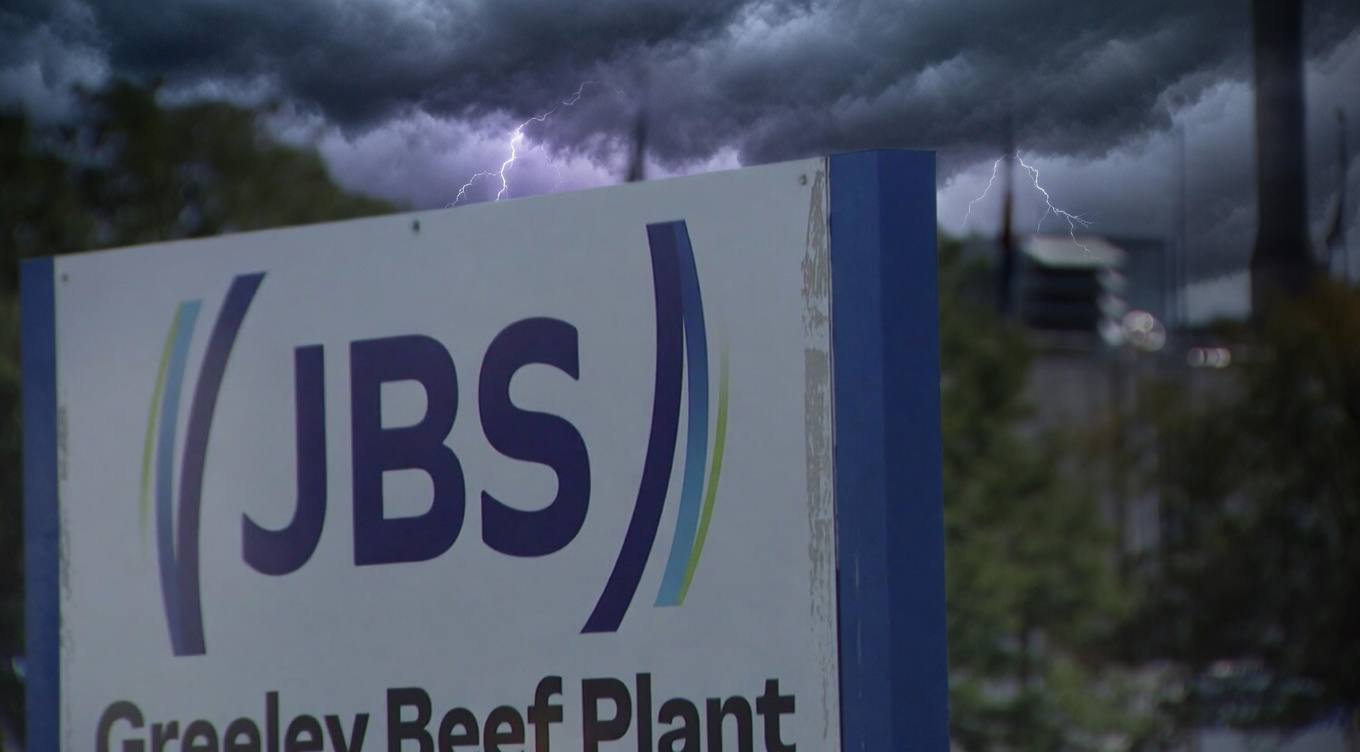
JBS Greeley strike enters third week — 5% of U.S. beef supply at risk
The picket line in Greeley, Colorado is now entering its third week, and the cattle complex is beginning to feel it. About 3,800 workers walked off the job at the JBS Swift Beef plant on March 16, launching what UFCW Local 7 described as the first strike at a U.S. slaughterhouse since workers walked out at a Hormel plant in Minnesota in 1985 — a 40-year silence now broken at a facility that accounts for roughly 5% of U.S. beef-processing capacity.
The stakes are compounding. The U.S. cattle population sits at a 75-year low — 86.2 million animals as of January 1, 2026, down 1% from the prior year. That means every shift JBS runs at reduced capacity is a slaughter slot that won’t come back. Multiple Colorado feedlots are already opting not to replace empty pens while awaiting resolution of the strike.
JBS has paid over $100 million in court settlements, legal fees, and fines in the past year alonefor illegal collusion with other meatpackers to repress worker wages and raise prices for consumers. The company claims its contract offer is fair. Kim Cordova, president of UFCW Local 7, said workers are fighting over the company’s ongoing illegal conduct at the bargaining table and inside the plant.
The question for ranchers watching from sale barns across the plains is not whether JBS workers deserve better wages. It’s what a prolonged shutdown at a Brazilian-owned company processing 5% of American beef reveals about the structural fragility of a system built on four bottlenecks. When one plant sneezes, the whole market catches cold. This is not resilience. This is concentration risk dressed up as efficiency.
BeefMaps.com exists precisely because this system cannot be trusted. Find independent ranchers selling direct — no Brazilian multinationals, no picket lines, no price suppression in the middle.
Federal land, federal action
USDA/DOI MOU signed — 240 million acres, 20,000+ ranchers, immediate implementation
On March 31, Secretaries Brooke Rollins and Doug Burgum signed a Memorandum of Understanding between the USDA Forest Service and the Bureau of Land Management, formalizing a new Grazing Action Plan with direct implications for more than 20,000 ranchers across 28 states.
The Forest Service and BLM together administer more than 23,000 permits and leases held by ranchers across approximately 29,000 allotments. About 10% of grazing allotments — roughly 24 million acres — are not under permit but are now targeted as opportunities to allow more grazing on federal lands.
The MOU is concrete in its commitments. It affirms a goal of maintaining grazing capacity wherever possible, including no net loss of Animal Unit Months within allotments. The agencies will streamline permitting between departments, improve emergency response, and embed federal employees directly on working ranches. Livestock grazing on BLM lands alone generates $2.7 billion in total economic output, supporting 35,000 jobs and $700 million in total labor income.
PLC President Tim Canterbury, a Colorado permittee, said: “By speeding up the permitting process and expanding the use of targeted grazing, the federal government is ensuring that more ranchers will keep ranching and that rangelands will face less degradation and destruction from wildfires and mismanagement.”
The watch now is implementation. Paper MOU signed. Allotments still pending. BLM and USFS permit processing speed will be the real scorecard in the next 30 to 60 days. Western ranchers on federal allotments should be engaging their district offices now.
Consolidation accelerates — again
82 mega-feedlots now supply 35% of fed cattle — up from 39 supplying 20% in 1997
While Greeley burns and Washington signs, the structural data tells the story no one in the industry wants to say plainly.
The U.S. has more than 26,000 feedlots. But according to the latest USDA Cattle on Feed report, just 82 — those with a capacity of 50,000 cattle and over — accounted for over 8.3 million cattle sent to slaughter, about 35% of the total. In 1997, there were more than 106,000 feedlots nationwide, and 39 mega-feedlots supplied about 20% of cattle sent to slaughter.
Forty fewer feedlots handle fifteen more points of market share. That is not efficiency. That is a cartel in formation.
R-CALF CEO Bill Bullard named the mechanism directly: “We already have four packers that control over 80% of the fed cattle market. In this consolidation process, we reduce competition. There are fewer cattle buyers to buy cattle for feedlot. And as a result of that, there’s less competition for cattle.”
The Big Four — JBS, Tyson, Cargill, National Beef — do not own the feedlots. They do not need to. Large commercial feedlots are best positioned to meet the volume and consistency demands of the Big Four, which together control about 85% of the U.S. beef supply. The feedlot consolidation and the packer consolidation are two gears of the same machine, and independent producers are ground between them. Fewer buyers. Narrower price windows. Tighter captive supply. Repeat.
As of January 1, 2026, there are 27.6 million beef cows in the United States — down 1% from last year — with a calf crop estimated at 32.9 million head, down 2% from the prior year. The herd is still contracting. The mega-feedlots are still consolidating. And the Big Four are still setting the price.
The answer is not waiting for DOJ to do something. The answer is BeefMaps.com — ranchers selling direct, consumers buying direct, and the cartel cut out of the equation entirely.
What to watch — next 72 hours
Strike negotiations or JBS capacity updates out of Greeley. USDA AMS slaughter pace and boxed beef cutout numbers. Any BLM or USFS allotment-specific action following the March 31 MOU. And cash cattle basis movement in Kansas and Texas — if the feedlot hold-back in Colorado spreads, you will see it there first.