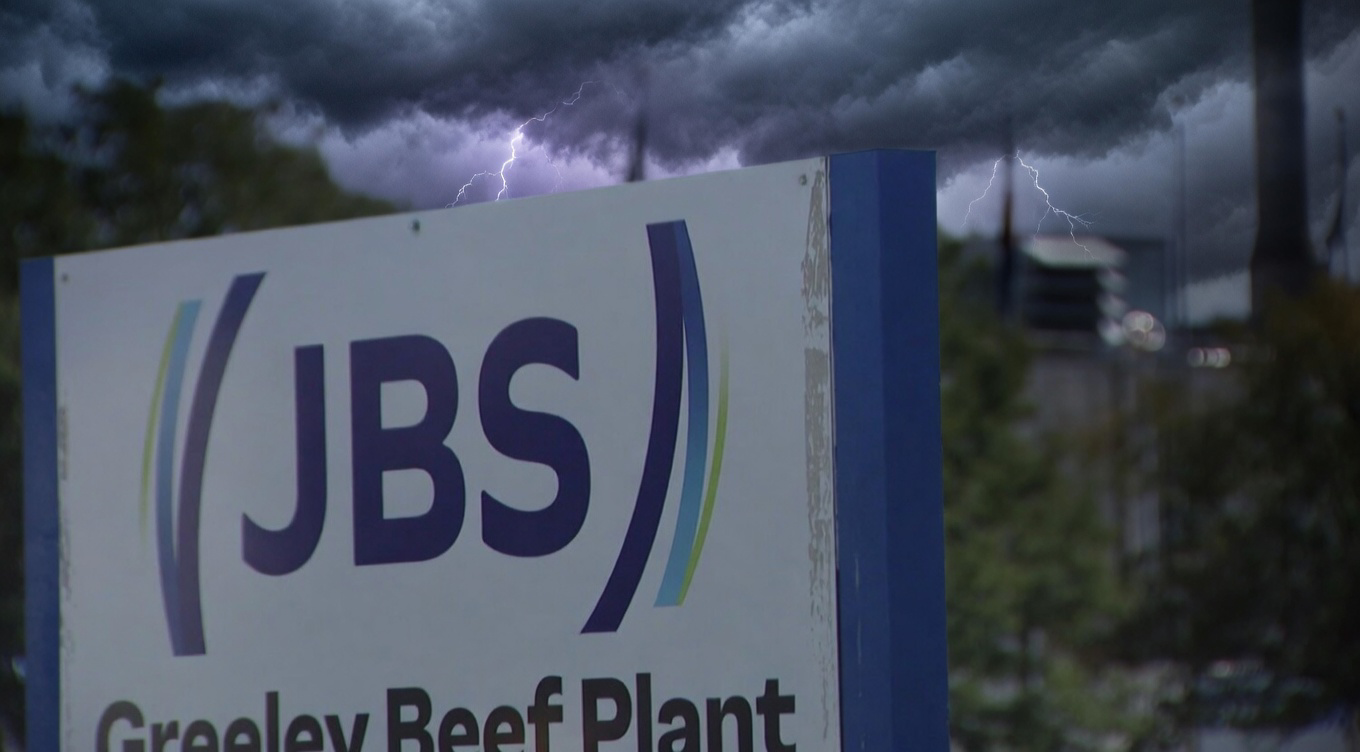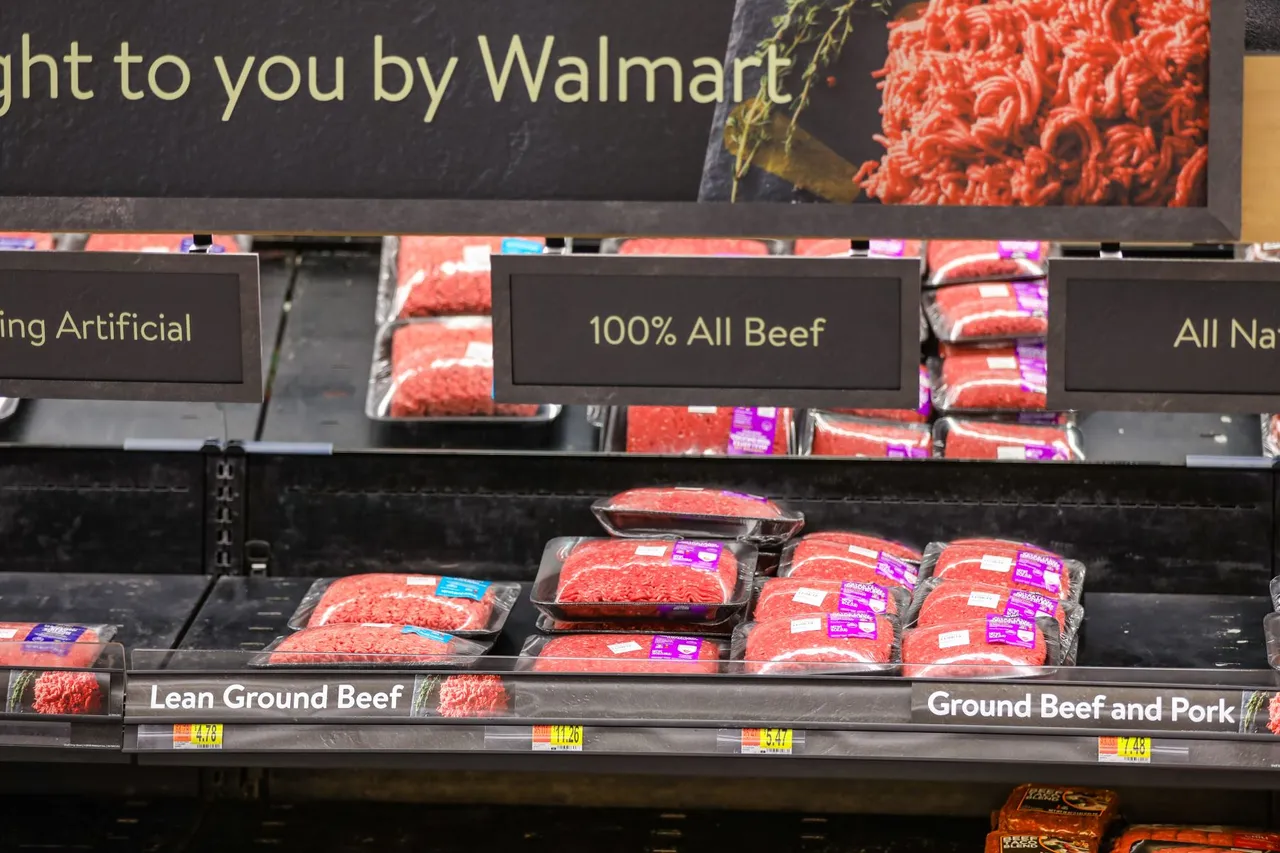
The clock on the wall of JBS’s Greeley, Colorado flagship plant reads midnight on Sunday, March 15. That’s when the contract extension dies. That’s when 3,800 workers — 99% of whom already voted to walk — can legally hit the bricks. And that’s when one of the largest beef processing operations in America goes from a $245/cwt record market to a ghost town on the high plains.
Feeder trader and analyst Corbett Wall said it plainly on this morning’s Feeder Flash: “This is going to be a rough week.” He’s right. What he didn’t fully spell out — because the market already knows — is that this isn’t just a labor dispute. It’s the structural rot of meatpacking monopoly playing out in real time, live on the CME.
EIGHT MONTHS. ZERO MOVEMENT.
This fight didn’t start in March. It started in July 2025, when JBS’s contract with UFCW Local 7 expired and the company agreed to keep talking. Eight months of talks. Eight months of “good-faith negotiations,” per JBS’s own statements.
The workers have a different word for it. On February 4, 2026, they held a daylong vote across all shifts. The result: 99% authorized an Unfair Labor Practice strike — not a contract strike, a ULP strike. That distinction matters legally. It means the union isn’t just unhappy with the offer. It means federal law was allegedly broken.
UFCW Local 7 President Kim Cordova laid it out in the union’s official release: “This strike authorization is the direct result of JBS’s unlawful and bad-faith conduct… the union has filed multiple Unfair Labor Practice charges against JBS. These range from regressive bargaining, to threats to withhold a proposed bonus and lump sum pension payment if workers exercise their democratic right to strike, to illegal intimidation and retaliation.”
Worker Leticia Avalos, speaking directly about conditions on the floor: “They continue to increase chain speeds and create dangerous working conditions all while reducing hours for workers. At the same time, the company is insisting on being able to steal workers’ pay through improper wage deductions. JBS has left us no alternative.”
Chain speeds went from 390 head per hour to 420 head per hour. Workers’ hours were cut. Alleged wage deductions were made without consent. The raise on the table? A 90-cent-per-hour increase — less than 2% annually — in a Colorado market where inflation has eaten that margin for breakfast. Meanwhile, at other JBS plants that accepted the national deal, more than two-thirds of those 2026 wage gains were wiped out by rising healthcare premiums.
THE DARE
JBS’s public response — issued March 6–7 as bargaining collapsed for good — is a masterclass in corporate doublespeak.
The company called its offer “strong, fair, and consistent with the historic national contract reached in 2025.” It accused the union of refusing to let workers vote on the deal. It announced it would shift production elsewhere during any stoppage: “We will temporarily shift production to other JBS facilities where we currently have excess processing capacity.”
Translation: We dare you. We have Cactus, Texas. We have Grand Island, Nebraska. We’re not worried about the workers — we’re worried about throughput numbers. You want to strike? Fine. The cattle go somewhere else.
“JBS has been stealing from workers’ paychecks to fund the company’s profits.” — Kim Cordova, UFCW Local 7
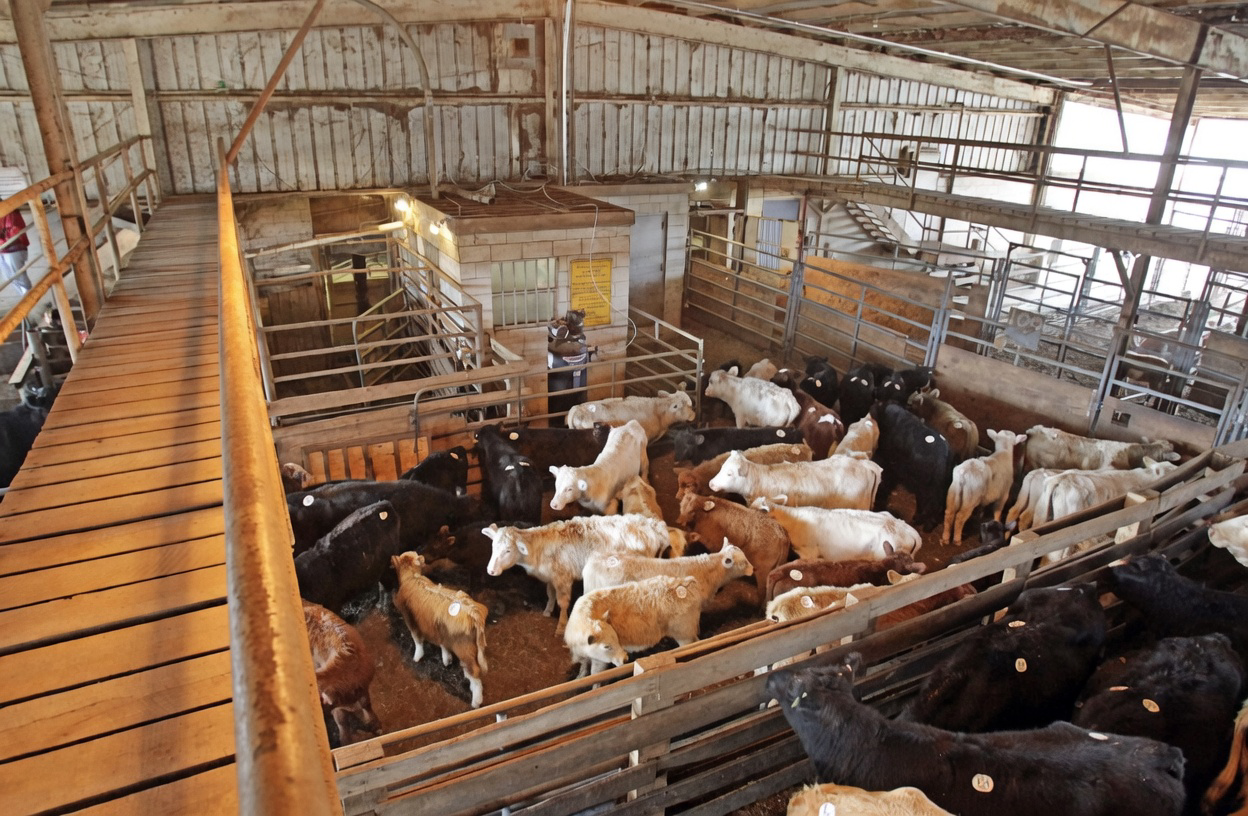
But here’s what JBS isn’t saying: Greeley processes between 5,000 and 6,000 head per day and is the largest employer in Weld County. You cannot simply reroute that kind of volume without friction, delay, and cost. There is no perfect backup. The logistics math doesn’t work cleanly. And every day the plant sits dark is a day cattle back up — and a day cash prices take a hit.
Meanwhile, the NLRB case search tells a different story than JBS’s eight-months-of-good-faith narrative. Multiple ULP charges have been filed against JBS Greeley — alleging regressive bargaining, illegal intimidation, threats to withhold bonus and pension payments, unilateral line speed changes, firing a member of the bargaining committee, and punishing a worker for filing a grievance. These aren’t union talking points. These are federal filings.
The company also faces a Haitian TPS worker class action, with workers alleging discriminatory line-speed assignments, housing exploitation, inadequate training, and wage theft — a workforce crisis hiding in plain sight while JBS management talks about competitive labor markets.
WHEN THE BOARD BLEEDS
The market already priced in the warning shot. On February 5 — the morning after the 99% vote — live and feeder cattle futures hit their daily limits within minutes. April Live Cattle (LCJ26) dropped more than $6.00 to 235.25 cents/lb. March Feeder Cattle locked limit-down at $7.50. The initial drop happened in the first 15 seconds — algorithmic sell programs keyed to the word “strike.”
That was on a vote. A non-binding authorization. This week, the 7-day notice is live. The extension ends midnight March 15. Earliest strike date: March 16, Monday morning. As of today the plant is still running — the union has explicitly told workers to keep reporting until further notice — but that window is closing fast.
Wall’s point on Feeder Flash this morning was precise: uncertainty kills markets before strikes do. Record-high cattle prices have had traders asking “how long can this last?” for months. This is the perfect headline trigger for a wave of profit-taking that drags feeders down with it, even if Greeley never actually goes dark.
There’s a second scenario Wall floated and the union’s lawyers are watching: preemptive “cooler cleaning.” JBS has the legal ability to shut down temporarily and claim maintenance — a documented industry tactic to avoid a formal lockout designation while achieving the same effect. The playbook exists. JBS knows how to run it.
85% IS NOT A MARKET. IT’S A MONOPOLY.
This isn’t a labor dispute in isolation. It’s a symptom.
The Big Four packers — Tyson, Cargill, JBS USA, and National Beef — control approximately 85% of the U.S. beef market. Forty years ago, that number was 36%. What happened in between is consolidation, vertical integration, regulatory capture, and the systematic destruction of independent processor competition.
When one company controls that much throughput at a single facility, a labor dispute doesn’t stay local. It becomes a national supply chain event. It becomes a CME event. It becomes a rancher-price event. The cattle backing up at feedlots waiting for Greeley’s chain to run aren’t JBS’s problem — they’re your problem, independent producer.
Into this moment, Senate Democrats this week introduced the Family Grocery and Farmer Relief Act — led by Schumer, co-sponsored by Booker, Warren, Sanders, Welch, Gallego, Merkley, and seven others. The bill would make it unlawful for a major meatpacking conglomerate to control more than one major type of meat. It imposes hard caps on beef concentration. It directs the FTC to design and enforce real divestiture plans — not fines companies treat as a cost of doing business. It targets foreign ownership. It funds small processors and co-ops through the SBA.
It will not pass a Republican Senate. But its timing — dropped directly into the week Greeley is going dark — is not accidental. The political window around meatpacking monopoly power is open for the first time in decades. The strike is the proof of concept for the argument the bill is making. Even R-CALF USA, which spent years fighting this fight from the right, called it a serious proposal worth engaging.
“The pernicious stranglehold of the meatpacking monopoly has weakened our supply chains and price gouged consumers at the grocery store.” — Senator Chuck Schumer, Senate Democratic Leadership
JBS S.A. is headquartered in São Paulo, Brazil — the world’s largest protein producer. Its U.S. CEO is Wesley Batista Filho, installed in 2023. One of its subsidiaries, Pilgrim’s Pride, was the largest single donor to Trump’s inauguration at $5 million. Six months later, JBS’s years-long bid to list on the New York Stock Exchange — blocked by the SEC for two years over corruption and Amazon deforestation concerns — was approved just two days after Trump’s SEC nominee took office. The company’s willingness to absorb a Greeley work stoppage is a function of global scale: they have excess capacity because they have plants everywhere. An American independent processor doesn’t have that cushion. That asymmetry is the monopoly advantage playing out live, in collective bargaining, in Weld County, Colorado.
This week, watch the board. Watch the open. If Greeley goes dark before Friday, you’ll see it in the futures before you see it in the news. If it doesn’t — if this ends in a last-minute deal or a management capitulation — the underlying structural problem doesn’t go away.
Eighty-five percent concentration. One plant processing up to 6,000 head a day. Workers fighting for less than 2% in an inflationary environment. A Brazilian conglomerate daring 3,800 Americans to walk.
This isn’t a supply chain. It’s a cartel. And the workers in Greeley are just the latest ones to figure that out.


0 Comments